An Etomidate API supply arrangement can appear secure while one approved manufacturer continues to deliver acceptable batches on time. The underlying risk becomes visible only when that manufacturer loses campaign capacity, a site enters remediation, a route-related impurity changes, an inspection delays regulatory acceptance, or commercial terms no longer support the product. At that point, finding another seller is relatively easy. Making the alternate material technically, quality and regulatorily usable is not.
Second-source qualification addresses that gap before it becomes a shortage. It gives the buyer time to identify the actual manufacturer, evaluate the named site and process, compare the API’s impurity and physical-property profile, test representative material, assess its behavior in the intended drug-product process, and determine the filing pathway. The objective is not merely to obtain a second quotation. It is to establish whether a defined Etomidate API source can be approved for a defined product, market and supply role.
What Is Second-Source Qualification for Etomidate API?
Second-source qualification is the documented evaluation and approval of an additional manufacturer or manufacturing source for Etomidate API. The work is normally performed through the buyer’s pharmaceutical quality system and involves Quality Assurance, Quality Control, Regulatory Affairs, Technical Operations, Procurement and Supply Chain.
The process determines whether the alternate source can consistently provide Etomidate API that:
- meets the buyer’s approved or development specification;
- has an acceptable impurity, stereochemical and physical-property profile;
- is manufactured at an identified site under an acceptable GMP and quality system;
- performs appropriately in the buyer’s drug-product process;
- can be traced through the complete supply chain; and
- is supported by the documentation and regulatory references required for the target market.
The phrase “second source” can be misleading because three decisions are involved. They may occur at different times and are not interchangeable.
| Decision | What it establishes | What it does not establish |
|---|---|---|
| Identify a possible alternate supplier | A commercial candidate appears able to offer the required material, volume, documentation and lead time. | The manufacturer, site or API is approved. |
| Qualify the supplier and manufacturing site | The legal parties, actual manufacturer, relevant facilities, quality system, GMP status and supply chain are acceptable for the defined scope. | The API will perform acceptably in every drug product or is cleared for every market. |
| Approve the API for a product or application | Material from the named source meets the applicable technical requirements and is suitable for the specified product, stage and market, subject to required regulatory acceptance. | Future batches can bypass normal release, change control or supplier monitoring. |
This distinction matters whenever the seller is not the original manufacturer. A distributor can be commercially approved while the site that synthesizes, purifies, tests or releases the API still requires separate assessment. Velcare’s guide to Etomidate API manufacturers and suppliers explains how those roles affect traceability and qualification evidence.
When Is a Second Etomidate API Source Needed?
There is no single trigger that makes dual sourcing mandatory for every Etomidate program. The decision should follow a documented risk assessment that considers patient supply, product lifecycle stage, demand, inventory coverage, geographic exposure, technical substitutability, regulatory lead time and the performance of the current source. The following conditions commonly justify starting qualification.
Dependence on a Single Approved Manufacturer
Qualification becomes important when development or commercial supply depends on one manufacturer, site, synthetic route or geographic region. This is concentration risk: several apparently separate vulnerabilities are tied to the same point of failure.
A manufacturer may have delivered reliably for years and still remain a single point of dependence. Fire, utility loss, raw-material scarcity, equipment failure, labor disruption, natural disaster, import restriction, adverse inspection outcome or a strategic decision to discontinue the product can affect availability without warning. The risk is higher when Etomidate is produced in infrequent campaigns, requires long-lead starting materials, uses equipment shared with higher-volume products, or has limited validated capacity.
The assessment should look beyond the supplier name. Two distributors sourcing from the same original manufacturer or the same final purification site do not create true manufacturing redundancy. Likewise, two sites using a common critical intermediate, release laboratory or regulatory file may still share a major dependency.
Repeated Supply Delays or Capacity Constraints
Delivery performance can show that a source is becoming less resilient before an actual interruption occurs. Warning signs include:
- quoted lead times that continue to extend;
- large differences between quoted and actual delivery dates;
- repeated missed commitments or partial deliveries;
- limited campaign windows and no workable reservation process;
- inability to support an approved demand increase;
- allocation during periods of high demand;
- minimal safety stock and no credible recovery plan; or
- growing dependence on expedited shipping.
One late shipment is not automatically evidence of an unsuitable source. The buyer should review patterns, root causes and corrective actions. A delay caused by a one-time customs issue presents a different risk from recurring production slippage, failed batches or an overloaded release laboratory. Velcare’s article on evaluating long-term Etomidate API supplier reliability describes the quality and delivery trends that should be monitored over multiple batches and purchase cycles.
Second-source work should begin while the primary source can still support development studies, method comparison and planned inventory. Waiting until allocation begins can leave too little time for an audit, testing, drug-product manufacture, stability work and regulatory review.
Quality or Compliance Concerns
A source’s risk profile can change even when most batches continue to meet release limits. Triggers for additional sourcing include:
- recurring deviations, out-of-specification or out-of-trend results;
- shifts in named, unknown or total impurities;
- unexpected changes in residual solvents, water, optical rotation or other attributes;
- increasing reprocessing or reworking;
- inconsistent results between the supplier’s certificate of analysis and the buyer’s laboratory;
- weak investigations, delayed CAPAs or repeated root causes;
- slow complaint responses or inadequate change notification;
- data-integrity concerns;
- serious inspection observations, import restrictions or an unclear GMP status; and
- unexplained changes to the manufacturer, testing site, route, specification or analytical method.
The presence of a concern does not mean the original supplier must automatically be replaced. The immediate action depends on severity, affected batches and patient or product risk. A second source provides an additional control against continued dependence while the original issue is investigated and managed.
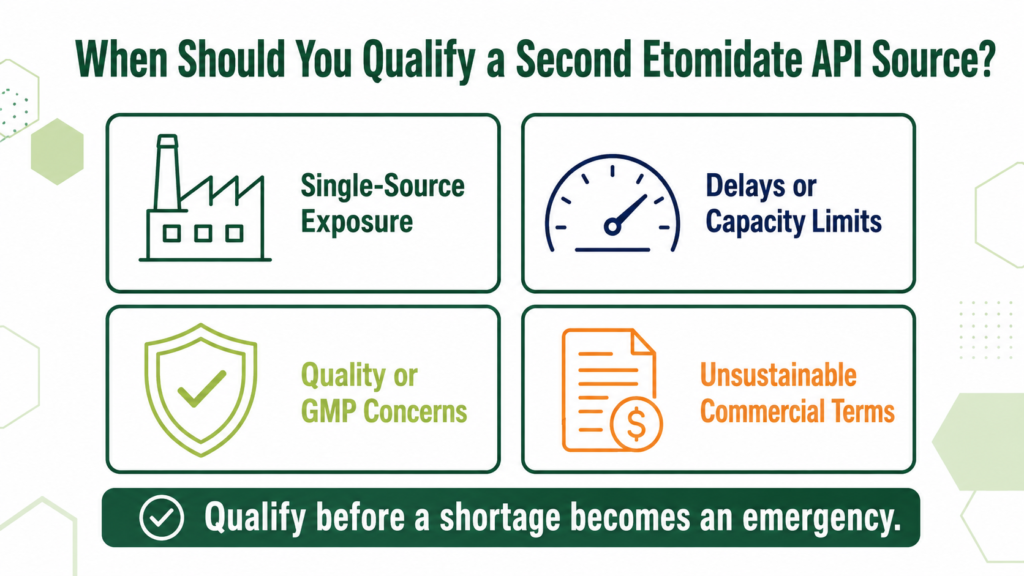
Figure 1. Common triggers for starting second-source qualification before a supply interruption.
Commercial Conditions Become Unsustainable
Commercial conditions can also make a single source impractical. Relevant changes may include:
- substantial material price increases without a workable long-term arrangement;
- minimum order quantities that create excessive inventory, expiry or cash-flow exposure;
- payment, Incoterm or delivery conditions that no longer fit the program;
- refusal to reserve capacity or commit to forecasted volume;
- pack sizes that do not suit development or commercial demand; or
- unwillingness to support the documentation, audits or change notifications required for continued approval.
Price should be considered as part of total supply value, not as the qualification standard. A lower quotation does not offset an unsuitable impurity profile, incomplete traceability, weak GMP evidence, insufficient regulatory support or poor product-process compatibility. The alternate source must first pass the same technical and quality gates that apply to the primary source.
Why Qualify a Second Source Before It Is Urgently Needed?
Reduce the Risk and Duration of Production Interruptions
An approved alternate source can reduce the time required to respond when the primary manufacturer cannot supply. The amount of time saved depends on what has already been completed. A candidate that has only supplied a sample is less ready than a source that has passed site qualification, method work, representative-batch testing, product comparability, stability requirements and applicable regulatory approval.
Qualification does not guarantee uninterrupted supply. Both manufacturers may rely on the same upstream material, transport route or market. The backup may also have campaign limits or competing commitments. Effective resilience therefore requires confirmation of independent dependencies, realistic capacity, inventory strategy and activation lead time.
Preserve Purchasing and Planning Flexibility
A second source can give the buyer more options for:
- allocating forecasted volume between approved manufacturers;
- scheduling API deliveries around drug-product campaigns;
- managing lead-time differences and safety-stock targets;
- supporting a planned scale-up;
- negotiating sustainable contracts and capacity reservations; and
- responding to a temporary constraint without abandoning a suitable primary supplier.
This flexibility is most valuable when it supports continuity rather than short-term price pressure. If the backup receives no forecast, no orders and no technical contact for years, it may not reserve capacity or maintain the documents required for rapid activation.
Prevent Emergency Qualification Decisions
Shortages create pressure to compress work that normally requires independent judgment. Teams may be asked to accept an older audit, incomplete process information, one sample, limited impurity data or a regulatory assumption that has not been confirmed. These shortcuts can transfer supply risk into quality or compliance risk.
Advance qualification allows the buyer to investigate meaningful differences instead of merely confirming that two certificates use similar limits. It provides time to reconcile analytical methods, obtain impurity standards, examine source-specific residual-solvent and elemental-impurity risks, run formulation trials, manufacture a representative drug-product batch and place stability studies on schedule.
Support Product Lifecycle Management
A qualified source can support more than emergency supply. It may be needed for future volume growth, geographic expansion, a new pack or formulation, a planned manufacturer replacement, technology transfer, or a move from development to commercial scale.
The addition should therefore be managed as a formal product and manufacturing change, not a procurement-only project. ICH Q10 places change management, quality risk management and oversight of outsourced activities and purchased materials within the pharmaceutical quality system. The change evaluation should define what must be demonstrated before implementation, who approves each gate, whether regulatory authorization is needed, and how the source will be monitored after approval.
What Must Be Qualified as a Second Source for Etomidate API?
The Etomidate API Manufacturer and Manufacturing Site
The qualification file should identify the legal manufacturer and the exact address of every site performing a quality-relevant operation. Depending on the supply chain, different facilities may handle synthesis, final purification, drying, milling or sieving, packaging, release testing, stability testing, storage and distribution.
The assessment normally covers:
- legal entity and manufacturing-site identity;
- applicable manufacturing licenses and registrations;
- GMP inspection history and current compliance information;
- quality-unit independence and quality-system maturity;
- deviation, investigation, CAPA, complaint and recall systems;
- change-control and customer-notification procedures;
- laboratory controls and data-integrity governance;
- training, validation, maintenance and computerized-system controls;
- management of contract sites and critical suppliers; and
- business-continuity arrangements relevant to Etomidate supply.
An audit may be on-site, remote or based partly on reliable third-party evidence, depending on risk and applicable procedures. The decision and audit scope should be justified, especially for a source intended for commercial use.
Approving a distributor does not replace qualification of the original API manufacturer and relevant sites. ICH Q7 also requires traceability and transmission of quality and regulatory information through agents, brokers, traders, distributors, repackers and relabelers.
The Manufacturing Process and Control Strategy
Etomidate from two suppliers may meet the same basic compendial description while carrying different process signatures. The buyer should therefore assess, to the level available under confidentiality arrangements:
- the synthetic route and defined API starting materials;
- critical process steps and intermediates;
- reagents, solvents, catalysts and processing aids;
- in-process controls and hold times;
- purification, crystallization, isolation and drying stages;
- milling, sieving or other final physical processing;
- use of recovered solvents or materials;
- reprocessing, reworking and batch-blending practices;
- process validation and ongoing monitoring; and
- controls for carryover, contamination and data integrity.
Route and process differences can change which impurities are formed, purged or carried into the final API. They can also affect residual solvents, catalyst-related elemental impurities, solid-state form, particle-size distribution, bulk density and handling behavior. Passing the same release specification does not prove that these profiles are interchangeable if the specification does not measure every product-relevant difference.
ICH Q7 expects API manufacture to operate under an appropriate quality-management system and applies GMP controls from the point at which the defined API starting material is introduced into the process. The buyer should verify that the proposed source’s control strategy is appropriate for the route and the intended commercial stage.
The API Specification and Analytical Methods
The alternate source should be compared against four references:
- the buyer’s approved or proposed Etomidate API specification;
- applicable pharmacopoeial requirements;
- historical results and variability from the current approved source; and
- the attributes required by the intended drug-product process and registered control strategy.
The test package may include:
- appearance and identification;
- assay;
- related substances, including named and unspecified impurities;
- stereochemical quality, such as specific optical rotation or an enantiomeric procedure where applicable;
- residual solvents;
- water or loss on drying;
- residue on ignition or sulfated ash;
- elemental impurities where the process and risk assessment make them relevant;
- particle-size distribution or other physical properties when they affect processing;
- solid-state or thermal characterization where technically justified; and
- microbiological attributes only where required by the specification or risk assessment.
Etomidate-specific data deserve close comparison. For example, a specification may control optical rotation and named process-related impurities such as Etomidate acid or Metomidate. The applicable test list and limits must come from the buyer’s approved requirement, not from a generic checklist or a supplier’s certificate alone.
Analytical procedures should also be classified. A method may be compendial, an internally developed supplier method, the buyer’s registered method, or a transferred procedure. The laboratory should determine whether verification, full or partial transfer, bridging, method validation, impurity-standard procurement or reference-standard qualification is required. Numerical differences cannot be interpreted properly until sample preparation, reference potency, calculation basis, system suitability, chromatographic integration, units and rounding rules have been reconciled.
Comparability and Drug-Product Suitability
API conformance and API comparability answer different questions. Conformance asks whether each batch meets its specification. Comparability asks whether source differences could affect the drug product, its manufacture or its stability.
The comparison should include actual batch data, not only specification limits. Teams should evaluate central values, ranges and chromatographic profiles across representative batches where available. Physical and solid-state attributes deserve additional work when they influence dispensing, dissolution, filterability, solution preparation or transfer losses.
For an Etomidate API intended for a solution formulation, product-relevant studies may include:
- dissolution behavior in the intended vehicle;
- clarity, color and precipitation risk;
- pH response during preparation;
- filtration time, filter compatibility and API recovery;
- adsorption to filters, tubing or processing surfaces;
- manufacturing yield and hold-time stability;
- compatibility with excipients and contact materials;
- drug-product assay and impurity profile;
- appearance and particulate results; and
- accelerated and long-term stability as required.
The test program should be proportional to the observed differences and their potential effect. Velcare’s guide to evaluating an Etomidate API sample provides a useful distinction: an acceptable sample can support technical screening, but it cannot establish long-term batch consistency, GMP compliance or commercial-source approval by itself.
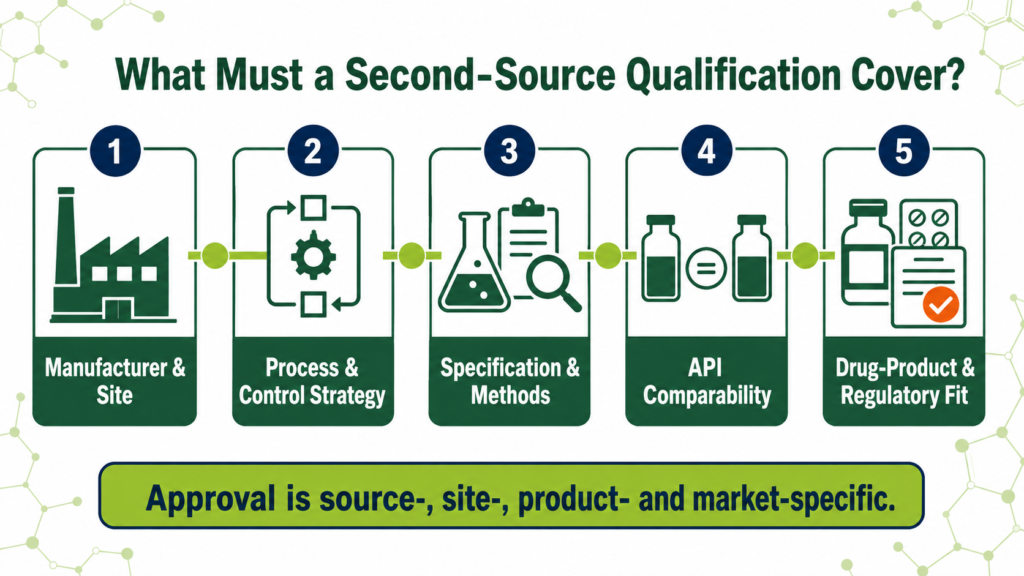
Figure 2. A second-source decision must cover the manufacturer, material, product and market – not only the seller.
How Is a Second Etomidate API Source Qualified?
1. Define the Business and Technical Need
Document why the source is being added and what role it is expected to play. It may be:
- a backup-only source;
- a routinely used dual source;
- a replacement for the existing manufacturer;
- a source for a new market;
- a development source that may later support commercialization; or
- added capacity for forecasted growth.
The project charter should state the Etomidate grade, specification, dosage form, product stage, target markets, expected volume, activation date, documentation needs and regulatory pathway. It should also assign decision owners across Procurement, QA, QC, Regulatory Affairs, Technical Operations and Supply Chain.
2. Screen the Candidate and Map the Complete Source
Initial screening should confirm that the candidate can plausibly meet the requirement before confidential and resource-intensive work begins. Verify the legal seller, original manufacturer, exact manufacturing sites, testing and release sites, distributor or agent relationships, proposed pack, lead time, MOQ, capacity and destination-market support.
The exact package depends on the target market and product stage. A clinical or development source may follow a different evidence plan from a source intended for an approved commercial drug product. Velcare’s Etomidate API document checklist and guide to regulatory documents for Etomidate sourcing provide more detailed document-level questions.
3. Audit the Relevant Site and Define Responsibilities
Use the quality risk assessment to determine audit depth, format and timing. The audit should focus on the operations that create or control risk for the proposed Etomidate source, not merely on whether a generic checklist has been completed.
Open observations should be classified, investigated and closed through acceptable CAPAs before approval where they materially affect the decision. A quality agreement should then define responsibilities for specification control, batch release information, deviations, OOS results, complaints, recalls, subcontracting, record retention, audits, regulatory support and prior notification of significant changes.
4. Test the Etomidate API Independently
Obtain a traceable sample or representative batch from the exact site and process proposed for supply. Testing should be performed by the buyer’s qualified laboratory or an approved third-party laboratory against a preapproved protocol.
At minimum, independently confirm identity and the critical quality attributes required by the applicable specification. Additional work may include:
- full compendial or registered specification testing;
- method verification, transfer or bridging;
- comparative related-substances profiling;
- stereochemical evaluation;
- residual-solvent and elemental-impurity testing based on process risk;
- physical-property characterization; and
- comparison of buyer and supplier results for the same batch.
A passing result should not conceal a meaningful discrepancy between laboratories. A difference may arise from the method, standard, calculation basis, sample handling or real material variability. It must be understood before the data are used to support approval.
5. Approve the Source and Establish Implementation Controls
The quality unit should make a documented decision against predefined criteria. Approval should identify exactly what is covered:
- legal supplier;
- original manufacturer and site;
- additional processing, testing and packaging sites;
- Etomidate grade and specification;
- approved manufacturing route or process scope;
- packaging configuration;
- intended product, stage and markets;
- incoming testing and release controls; and
- conditions or open commitments.
Update the approved supplier or material records, quality agreement, specifications, methods, sampling plan, ERP data, warehouse instructions and change-control documentation. Train affected personnel before the first shipment is received. If the source is approved only for backup use, state the activation steps and the minimum notice, batch testing and documentation review required before use.
6. Determine the Regulatory Submission Path Before Commercial Use
Regulatory Affairs should determine the filing pathway early, then confirm it again when the final source, process and comparison package are known. Depending on jurisdiction, dosage form, application status and the nature of the change, adding the source may require:
- an amendment to a pending application;
- a prior-approval supplement or another postapproval reporting category;
- a regional variation;
- updated drug-substance information in the application;
- a DMF or ASMF reference and current letter of authorization or access; or
- updates connected with the manufacturing site, specifications, methods or stability commitments.
FDA’s guidance on an alternate API source in pending ANDAs explains that the evidence and regulatory approach depend on the circumstances. FDA’s 2023 quality presentation notes that a change to a new drug-substance manufacturer usually involves more than a simple site change because route, solvents, equipment and process can differ. It describes a prior-approval supplement as the general postapproval pathway for an alternate drug-substance source, while also discussing a limited CBE-30 situation for the same applicant after that source has been approved through a PAS for another ANDA and other conditions are met.
Internal supplier approval does not authorize commercial use when a registered product also requires regulatory approval. The source should be implemented only after the applicable filing, review, approval and launch conditions have been satisfied.
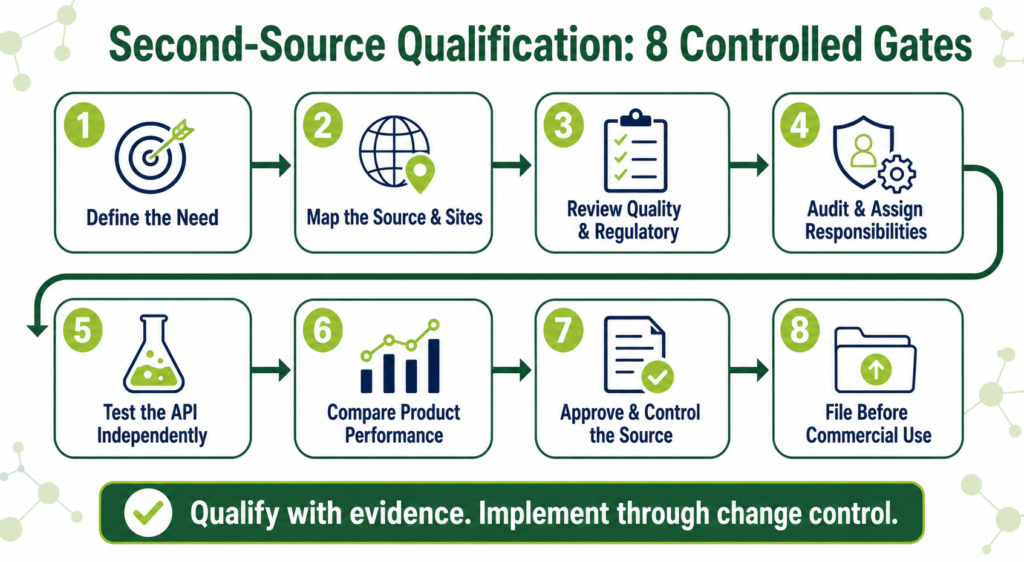
Figure 3. Eight controlled gates from sourcing need through regulatory implementation.
Can a Second Source Be Qualified Without Immediately Using It?
Yes. A company may qualify a source as a backup without routinely allocating purchases to it. However, “qualified” needs to be defined carefully.
An organization may complete internal supplier and technical approval while a market-specific regulatory filing remains outstanding. Such a source is qualified for the completed internal scope but is not immediately deployable for a registered product that requires prior regulatory acceptance. A truly ready backup has both the necessary internal approvals and the regulatory status needed for its intended market.
How Velcare Pharma Can Support Second-Source Evaluation
Velcare Pharma can be considered as a potential Etomidate API manufacturing or supply source within the buyer’s established qualification system. The scope of support should be confirmed for the specific product, market, quantity and confidentiality arrangement.
Depending on availability and the stage of evaluation, discussions may cover:
- representative qualification documents;
- current specifications and batch certificates of analysis;
- traceable samples for laboratory and formulation assessment;
- manufacturing-site, quality-system and supply-chain information;
- available regulatory-document support;
- lead time, MOQ, pack size, capacity and forecast expectations; and
- technical responses needed to close qualification questions.
This support does not create automatic approval, interchangeability or guaranteed regulatory acceptance. The buyer’s quality unit remains responsible for approving the supplier, manufacturer, site and material for the intended use. Regulatory authorities determine whether the evidence and filing support use in the applicable market.